Impartiality as the foundation of trust
Impartiality as the foundation of trust
Impartiality means freedom from bias or conflict of interest — any situation in which a personal, financial, or professional interest could compromise, or appear to compromise, the objectivity of an assessment (ISO/IEC 17065:2012). For a certification body, this is not a nice-to-have. It is the foundation of trust.
HQAI has built a multi-layered system to ensure that objectivity is never left to chance.
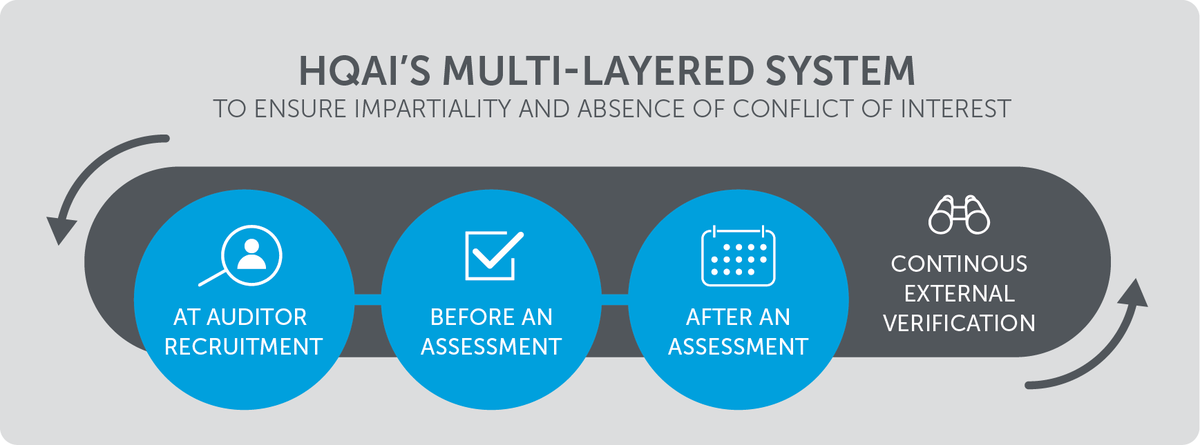
Before an auditor join
Every auditor signs a binding Code of Conduct, Conflict of Interest Policy, and Terms of Reference aligned with ISO 19011 guidelines. From day one, the rules for identifying, disclosing, and managing actual or potential conflicts are non-negotiable
Before an assessment begins
HQAI systematically screens both the client organisation and the assigned audit team for conflicts. Auditors must explicitly confirm the absence of any conflict before engagement. The client also receives the professional profiles of the proposed auditors in advance, enabling independent due diligence and the right to object.
After an assessment
At least twice a year, the Advisory and Complaint Board (ACB) — an independent body organisationally separate from HQAI's operational organs — reviews all identified or potential conflicts and assesses whether the mitigation measures taken were appropriate.
Continually externally verified
The entire conflict-of-interest framework is audited annually as part of HQAI's ISO/IEC 17065:2012 accreditation and subject to an independent external review under ISAE 3000.
The result: a process where impartiality is not merely declared, but continuously proven.
Category